
U.S. Bond Intervention and the Fed: What Treasury’s Buybacks Can—and Cannot—Do
Treasury is doubling long-end bond buybacks, but the move is debt-management intervention—not Fed-style quantitative easing. Here is what it can and cannot change.
Treasury is doubling long-end bond buybacks, but the move is debt-management intervention—not Fed-style quantitative easing. Here is what it can and cannot change.

China’s new offshore-trust tax rules apply a 20% rate, a defined historical lookback and a 90-day transition window. Here is how the taxable amount is calculated.

Record chip sales are being driven disproportionately by AI infrastructure and memory, creating a powerful but uneven industry expansion.

The Fed’s September meeting will test whether cooling inflation can offset weaker hiring—and whether a divided committee can agree on the policy path.

U.S. equities remain highly valued as strong profits and AI optimism confront higher real yields and an unusually thin equity-risk premium.

China’s scale in robot production and deployment could create a powerful industrial feedback loop—but software, profitability, safety and geopolitical barriers will decide whether it becomes dominance.

South Korea’s extraordinary equity rally has raised a harder question: can governance and market-access reforms turn momentum into a durable rerating?

Europe’s headline growth has improved, but the gap between stronger domestic-demand economies and a weak industrial core is widening.

China’s AI race is moving beyond models into cloud infrastructure, domestic chips, factory software and robotics. The commercial opportunity is widening, but so are capital and execution risks.
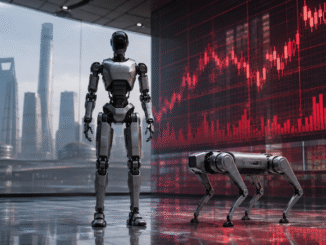
Unitree’s Shanghai debut turned China’s robotics leader into a US$50 billion public company. The technology is real—but the valuation assumes commercial adoption will accelerate dramatically.
Copyright © 2026 | WordPress Theme by MH Themes